
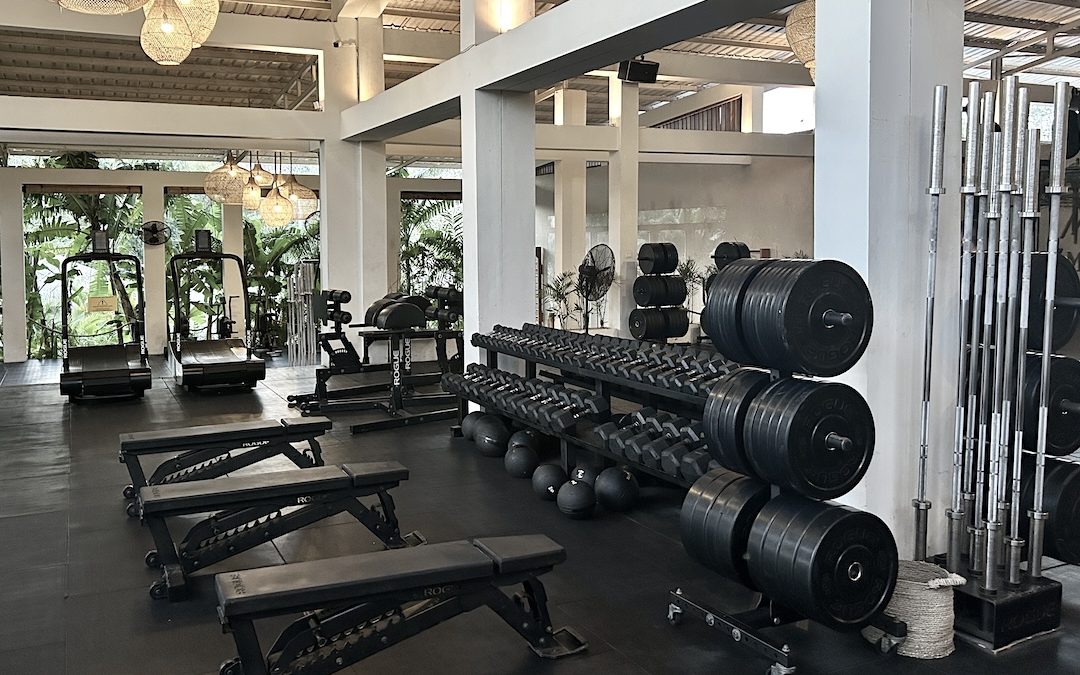
In your 40s and 50s, your training approach should no longer be the maximal-effort, ego-driven style of people in their 20s. Strength training in midlife is more than just building muscle. It is about maintaining strength, protecting your health, and preserving the physical capacity to live independently for decades to come.
These 10 golden rules provide a practical framework for strength training in your 40s and 50s—helping you train effectively, recover properly, and build a stronger body for the years ahead.
1) CHANGE YOUR MINDSET
Leave your ego at the gym entrance. The idea “if the bar ain’t bending you’re just pretending” is for younger lifters and not for longevity. In midlife, progress comes from consistency, control, and intelligent effort – not from constant maximal loading. Most of your training should be performed with moderate weights that allow you to provide sufficient stimulus for muscle while preserving joint health and recovery capacity.
2) WARM UP, MOBILIZE, AND STRETCH
Aim to dedicate around 10-15 minutes daily to mobility and stretching work. Yoga can be particularly effective. Before each strength exercise, perform progressive warm-up sets: start with light weights and gradually increase to your working weight. This primes your joints, activates the relevant muscles, and reduces injury risk.
3) COMBINE COMPOUND AND ISOLATION EXERCISES
A well-structured program is built on compound, multi-joint movements such as squats, lunges, deadlifts, presses, and rows. These exercises recruit large amounts of muscle and reflect real-world movement patterns like lifting, climbing, pushing, and pulling. At the same time, isolation exercises – such as biceps curls, triceps extensions, lateral raises and chest flies – play an important supporting role. You provide a relevant stimulus to the muscle but isolation exercises are less taxing on your body, create less systemic fatigue and you can recover more easily.
4) CHOOSE THE RIGHT WEIGHT
Heavy training still matters, but it should be used selectively. Loads that allow about five repetitions with good form are important to stimulate bone density and support hormonal health. However, they are also highly demanding. A balanced approach works best: roughly 10–20% of your training with heavy weights, about 50% in a moderate range (8–12 repetitions), and 30–40% with lighter weights (12–20 repetitions). When using lighter loads, maintain the intensity by slowing down repetitions and emphasizing the eccentric (lowering) phase. As a general rule, the lighter the weight, the closer you should train to technical failure and the heavier you train, the more reps in reserve you should consider.
5) SELECT EXERCISES WISELY TO MINIMIZE INJURY RISK
Recovery from injury takes significantly longer in your 40s and 50s. The priority is to stay healthy, avoid injuries and continue uninterrupted training over months and years.
Some exercises carry higher risk, especially those heavily loading the lower back. Limit demanding lifts like heavy squats and deadlifts to about once per week. You might consider reducing or replacing heavy squats and deadlifts. Alternatives such as Romanian deadlifts or split squats can provide similar benefits with lower risk. Include unilateral (single-leg or single-arm) exercises to improve balance and stability, which naturally decline with age, while allowing you to train hard without excessive loads.
6) FOCUS ON STRENGTHENING YOUR BACK
Years of sitting tend to pull the body into a forward-leaning posture – tightening the chest and hip flexors while weakening the posterior chain. This imbalance contributes to poor posture and discomfort. Prioritize pulling movements to counteract this pattern, helping to bring the shoulders back and restore proper posture. Strengthening the entire posterior chain – especially the upper and lower back – also plays a key role in protecting the spine and reducing the likelihood of back pain.
7) CONSIDER DUMBBELLS AS AN ALTERNATIVE TO BARBELLS
Barbells are considered the ‘gold standard’, but they impose a fixed movement path that may not suit every joint as connective tissue loses elasticity with age. Dumbbells offer greater freedom of movement, allowing your joints to follow a more natural path. They often allow a greater range of motion and reduce joint stress, making dumbbells a valuable alternative or complement in midlife strength training.
8) PRIORITIZE PERFECT FORM
Proper technique is absolutely crucial to avoid injury. Many people increase the weight too quickly, sacrificing form in the process. While your body might tolerate this in younger years, it significantly increases injury risk in midlife. Every repetition should be controlled, without momentum in the movement. Emphasize the eccentric phase and maintain full control throughout the set. If you cannot execute the final repetitions with proper form, the weight is too heavy and you should reduce it (see rule 1).
9) PRIORITIZE RECOVERY AND MAINTAIN CONSISTENCY
Progress is not measured session by session but over months and years. Pushing for an extra set or heavier weight today is not worth risking an injury and missing tomorrow’s workout. Manage fatigue by setting limits for the total working sets per session, alternating harder and easier days. Avoid training through pain: if an exercise causes discomfort due to injury, modify or replace it until it can be performed pain-free. Sleep is a critical component of recovery, if not the most important: aim for around eight hours per night to support muscle repair, hormonal balance, and overall performance.
10) SUPPORT YOUR TRAINING WITH PROPER NUTRITION
Strength training without adequate nutrition limits progress. Protein intake becomes especially important, as the body’s sensitivity to muscle protein synthesis declines with age.
A practical target is around 1.5 grams of protein per kilogram of body weight per day. This supports muscle maintenance and growth, improves recovery, and helps optimize body composition.