
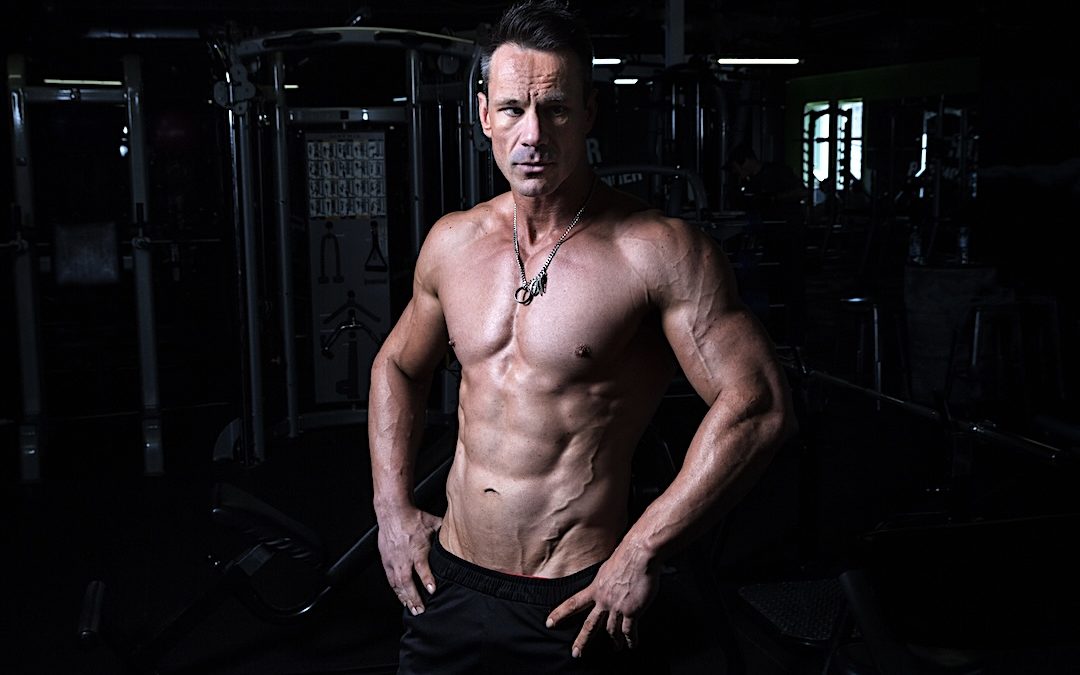
But there is good news: you can do something about the age-related physical decline. Strength training is the most potent anti-aging intervention that helps you to
- stay strong,
- stay healthy,
- look good and
- maintain your independence
for as long as possible.
1. STAY STRONG – PROTECT YOUR MUSCLES AND BONES
Prevent and Reverse Age-Related Muscle Loss (Sarcopenia)
After the age of 30, you begin to lose muscle mass and strength. Around 3-8% of muscle mass is lost per decade. During midlife, the rate accelerates and you will have lost up to 30-50% of your muscles at age 75. This muscle loss is not merely cosmetic. You lose strength even faster than muscle, you lose power and you are at higher risk of injury.
Let’s be clear: “staying active”, walking, yoga, running, cycling or other cardiovascular activity do not stop the process of decline. Only resistance training provides the mechanical stimulus required to maintain and rebuild muscle tissue.
For midlife men, maintaining muscle is critical. Once muscle is lost, rebuilding becomes progressively harder with age. Strength training will not only slow down muscle loss but partially reverse it. Yes, it is possible to build muscle even in your 40s and 50s! It is never too late to start. However, the earlier you start, the easier it is.
Preserve Bone Density and Protect Joints and Tendons
Bone density peaks in early adulthood and begins to decline in midlife. The older you get, the higher the fracture risk of your hip, femur, spine, wrist etc. Ultimately, falling becomes a major threat to your independence. Strength training applies mechanical load to bones, joints and tendons. This stimulates the building of new tissue and increases the mineral density of bones. Stronger muscles also stabilize joints, reducing chronic pain and injury risk as you age.
2. STAY HEALTHY – MAINTAIN METABOLIC AND HORMONAL HEALTH
Maintain Metabolic Health
Your body’s ability to manage food intake typically worsens in midlife. You build up visceral fat (the deep abdominal fat around your organs) and liver fat, followed by carbohydrate metabolism issues. Insulin sensitivity drops, your body has a harder time handling glucose and storing it in your liver and muscles. The consequence: Metabolic syndrome affects 20-40% (depending on country and lifestyle) of men in their midlife and increases their risk for heart disease, stroke and type 2 diabetes.
Strength training directly addresses these issues: Muscle is your primary storage for glucose. The more muscle you have the better your body can manage blood sugar. It also improves insulin sensitivity.
Testosterone
Testosterone levels in men decline gradually with age. You feel less powerful and motivated, your energy levels drop and your libido decreases. Strength training provides a strong anabolic signal and improves the hormonal effectiveness, even as absolute levels decline. This supports muscle maintenance, fat distribution, libido, mood, and energy.
3. LOOK GOOD – IMPROVE YOUR BODY COMPOSITION
Improve Body Composition – Not Just Body Weight
Most men gain weight in their 40s and 50s and the problem is often underestimated: we naturally lose muscle mass as we age. Even if you manage to maintain your body weight, you are actually replacing muscle with fat. This leads to a worse body composition.
Strength training changes your body composition. You increase your lean muscle mass and reduce your fat mass. Even when total weight loss is modest, your body composition improves substantially. With improved body composition you will not only look better. It also replaces metabolically inactive tissue (fat) with metabolically active tissue (muscle). You burn more calories at rest.
4. EMPOWER YOURSELF – PROMOTE LONGEVITY & INDEPENDENCE
Maintain Functional Strength for an independent Daily Life
Functional strength is the ability to perform real-world movements efficiently and safely: lifting and carrying things, getting up from the floor, climbing stairs without effort, reacting quickly to prevent falls. You need this for skiing, hiking, playing with your kids and carrying your groceries.
Strength training builds reserve capacity. It creates a buffer against life events, injuries, and aging itself. You remain capable rather than cautious.
Increase Health-span
Living longer is not the primary goal. It’s about staying resilient and enjoying an independent, active lifestyle for as long as possible. Muscle strength is one of the strongest predictors of all-cause mortality in men. It prevents frailty, reduces the risk of disease and maintains metabolic health.
Strength training is not about performance – it is about refusing unnecessary decline. It is an investment in your future autonomy and increases the chance that you stay healthy for a longer time and maintain agency of your life.
EXPLORE MORE
10 GOLDEN RULES FOR STRENGTH TRAINING IN YOUR MIDLIFE
Success in midlife depends on training intelligently: focusing on proper technique, appropriate exercise selection, balanced loading, adequate recovery, and consistent effort over time. Combined with sufficient protein intake and injury prevention, strength training helps you to stay strong, healthy, and capable for the coming decades.